Google Ads vs Meta Ads for Prefab Companies: Where Your Budget Actually Works
By Editor · June 2026
A quick note: article images are stock photos or AI concept visuals, there to illustrate ideas. Our client renders are a different story — every one is hand-built by our 3D team.
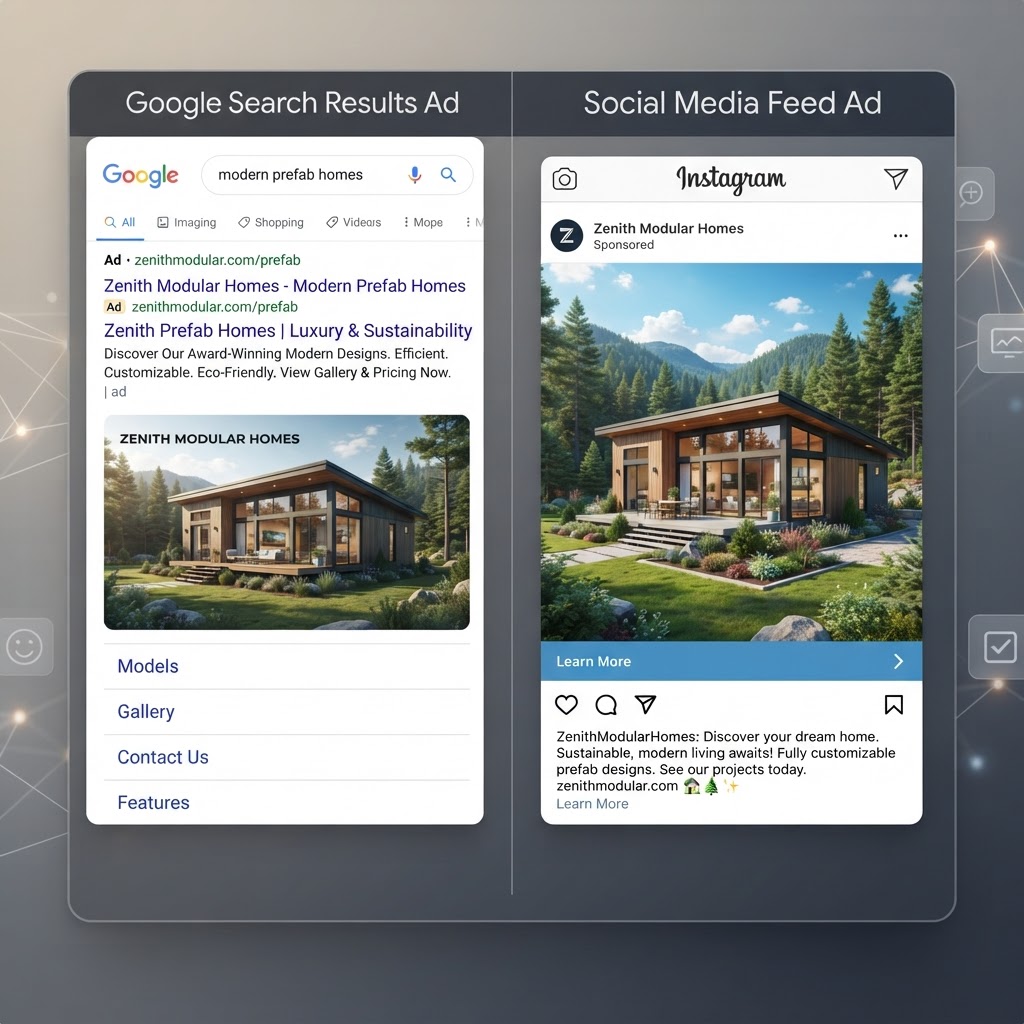
Prefab is not an impulse purchase. A buyer's journey runs six to eighteen months, sometimes longer, and it moves through distinct phases — research, desire, comparison, and finally commitment. A single channel can't cover that whole arc. Google Ads for builders and Facebook ads for prefab homes play different roles at different stages, and a modular home advertising budget that treats them as interchangeable is wasting money on both.
Google captures intent
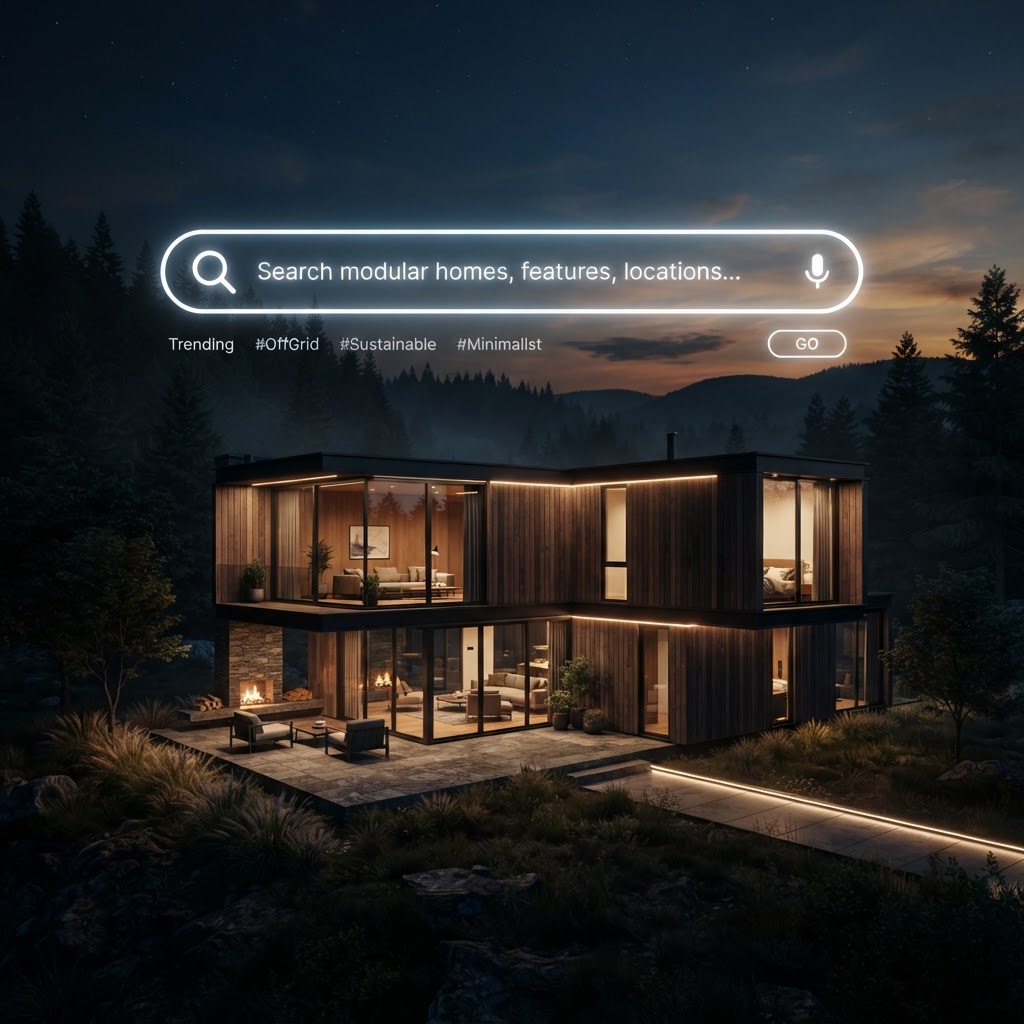
Google is where high-intent buyers arrive. Someone searching 'modular homes price' or 'prefab home cost' is telling you exactly what stage they're at. Google ads for builders win these moments because you meet the buyer at the point of active research. The budget here is small but sharp — a handful of high-intent keywords, a landing page that answers the question, and a clear path to enquire.
Meta builds desire and stays present
Meta is where desire is created and maintained over months. A buyer who first sees your home in their feed may not enquire for a year. Facebook ads for prefab homes work because they keep your brand present through that long consideration — showing renders, build stories and testimonials until the buyer is ready. This is awareness and nurturing, not direct response, and it should be measured that way.
Why retargeting is non-negotiable
Structure your budget around the buying cycle
- Google — capture high-intent searchers with a small, focused keyword set.
- Meta — build desire and stay present across the 6–18 month journey.
- Retargeting — re-engage site visitors who didn't enquire the first time.
- Creative per platform — search copy on Google, visual stories on Meta.
Realistic budgets and the right creative
A realistic prefab lead generation budget leans lighter on Google (intent is scarce but high-value) and heavier on Meta plus retargeting (where the long game is won). The creative must match the platform: search copy that answers questions on Google, and visual build stories and renders on Meta. Retargeting home buyers across the whole journey is what turns early interest into a much later enquiry — without it, you're paying to introduce yourself to people you then forget.
Split your budget by intent, not by habit. Google wins the moment of search; Meta wins the months around it. Together, with retargeting holding them together, they cover the full prefab buying cycle.
Want an ad strategy built for the prefab buying cycle? Talk to Craneday Studio about your modular home advertising budget.
Get in touch